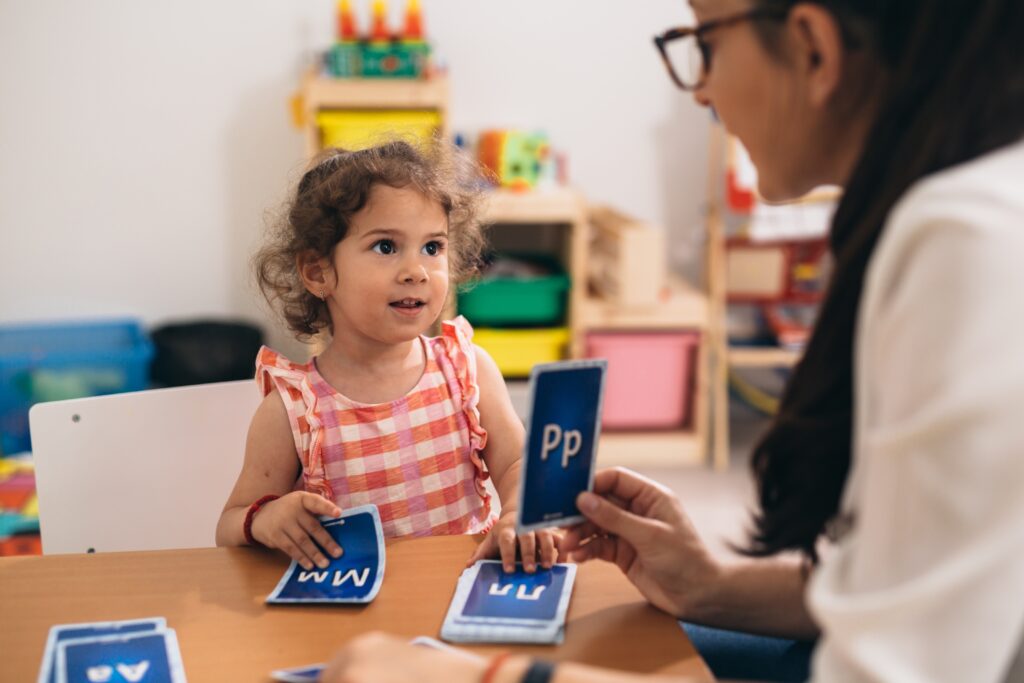


What is AAC? A Parent Guide to Augmentative and Alternative Communication

Communication is about so much more than talking.
Children communicate their wants, needs, thoughts, feelings, ideas, preferences and experiences in many different ways. For some children, spoken language can be difficult, unreliable, or still developing. When this happens, Augmentative and Alternative Communication (AAC) can provide another way to communicate and connect with the people around them.
Quick Answer: What is AAC?
AAC (Augmentative and Alternative Communication) is any tool, system, or strategy that helps a child communicate when speech is difficult, unreliable, or does not meet all of their communication needs. AAC can support spoken language or provide an alternative way to communicate through gestures, signs, picture boards, communication books, apps, or speech-generating devices.
This is one of the most important things for parents to know: AAC is about communication, not replacing speech.
For many children, AAC provides access to language while speech and communication skills continue to develop.
- AAC helps children communicate
- AAC does not stop children from talking
- AAC can be used alongside speech
- Children can start AAC at any age
- There are no prerequisite skills for AAC
- Parents and caregivers are the most important communication partners
How Does AAC Help Children Communicate?
Communication is a fundamental human right.
When children have a reliable way to communicate, they can:
- Express their wants and needs
- Share thoughts and feelings
- Build relationships
- Participate in family life
- Engage in learning opportunities
- Make choices
- Build independence and confidence
- Reduce frustration
- Participate more successfully at school and in the community
We often hear the phrase: “Behaviour is communication.”
When children struggle to express themselves, they may communicate through behaviour instead. AAC provides a clearer and more effective way for children to share what they are trying to tell us.
The goal is not simply communication. The goal is participation, connection, learning and belonging.
Parent Summary Box: Did You Know?
Many children who use AAC continue to develop spoken language.
AAC does not replace speech. It provides children with another reliable way to communicate while language skills continue to grow.
Who Can Benefit From AAC?
Does My Child Need AAC?
AAC can support children who have difficulty communicating their thoughts, needs, feelings, ideas or experiences.
AAC may be appropriate for children who:
- Have Autism Spectrum Disorder (ASD)
- Have cerebral palsy
- Have Down syndrome
- Have developmental language disorder
- Have childhood apraxia of speech
- Have speech delay
- Have acquired brain injuries
- Have complex communication needs
- Have speech that is difficult for others to understand
Importantly, AAC is not only for children who cannot speak. Many children use AAC alongside spoken language to support successful communication.
Is AAC Good for Autism?
Yes. AAC can be highly beneficial for autistic children who experience communication challenges.
Some autistic children use AAC as their primary communication system, while others use AAC alongside speech to support social interaction, self-expression and participation in everyday activities.
Learn more about Early Start Australia’s Autism support services.
What Are the Benefits of AAC?
AAC supports far more than communication.
Benefits can include:
- Increased communication success
- Stronger language development
- Improved literacy skills
- More social interaction
- Increased independence
- Reduced frustration
- Greater confidence
- Better participation at home and school
- More opportunities to build friendships
- Improved quality of life
AAC helps children access opportunities they may otherwise miss when communication is difficult.
Does AAC Stop a Child From Talking?
This is one of the most common questions parents ask. The short answer is: No.
Research consistently shows that AAC does not prevent speech development.
In fact, for many children, AAC supports speech and language development because it:
- Reduces communication frustration
- Provides access to vocabulary
- Creates opportunities for successful communication
- Encourages interaction with others
- Supports language learning
AAC is not about replacing speech. AAC is about supporting communication in whatever form works best for the child.
Many children communicate using a combination of:
- Speech
- AAC
- Gestures
- Signs
- Facial expressions
- Body language
Communication is naturally multimodal.
Can AAC Improve Language Development?
Yes. AAC can support language development by providing children with consistent access to language throughout the day.
When adults model AAC regularly, children can learn:
- New vocabulary
- Sentence structure
- Turn-taking skills
- Social communication
- Literacy foundations
- Communication confidence
Learning AAC is similar to learning spoken language. Children need many opportunities to see language being used before they can use it independently themselves.
What Age Can a Child Start AAC?
Is My Child Too Young For AAC?
No. Children can start AAC at any age. There are no prerequisites for access to communication.
Children do not need to:
- Reach a particular age
- Demonstrate certain skills
- Pass an assessment
- Show they are “ready”
Communication is a basic human right. Early access to AAC often means more opportunities for communication, participation and language development.
What Types of AAC Are Available?
AAC comes in many different forms. Often children use a combination of AAC supports rather than a single system.
No-Tech AAC
No-tech AAC uses the body without any equipment.
Examples include:
- Gestures
- Facial expressions
- Eye gaze
- Body language
- Key Word Sign
- Sign language
Low-Tech AAC
Low-tech AAC involves simple, non-electronic tools.
Examples include:
- Picture cards
- Communication boards
- Visual schedules
- Communication books
- Alphabet boards
High-Tech AAC
High-tech AAC uses electronic technology.
Examples include:
- Tablet communication apps
- Speech-generating devices
- Eye-gaze systems
- Dedicated AAC devices
The best AAC system is the one that helps a child communicate successfully.
What Is the Difference Between Low-Tech and High-Tech AAC?
What Is the Best AAC Device for Children?
There is no single “best” AAC device.
The most effective AAC system depends on:
- Communication abilities
- Motor skills
- Visual skills
- Learning profile
- Family needs
- Everyday environments
Some children use only low-tech AAC. Some use only high-tech AAC. Many use both.
The goal is always functional communication, not technology complexity.
How Do I Know If My Child Needs AAC?
Your child may benefit from AAC if they:
- Have difficulty expressing their wants and needs
- Become frustrated when communicating
- Struggle to participate in conversations
- Are difficult for unfamiliar people to understand
- Use gestures more than speech
- Have limited spoken language
- Find social communication challenging
AAC does not need to be a “last resort.” If communication is difficult, AAC may be worth exploring sooner rather than later.
How Does an AAC Assessment Work?
A Speech Pathologist can help determine whether AAC may support your child.
An AAC assessment typically considers:
- Communication skills
- Speech skills
- Language development
- Literacy skills
- Motor abilities
- Vision
- Hearing
- Learning strengths
- Family goals
- Daily routines
The goal is to identify the communication system that best supports participation across home, school and community environments.
Learn more about Early Start Australia’s Speech Pathology Assessments.
Communication Is About More Than Talking
Communication affects almost every aspect of daily life.
Children use communication while:
- Playing
- Learning
- Eating
- Making friends
- Following routines
- Managing emotions
- Participating at school
- Being part of their family
This is why Speech Pathologists often work alongside Occupational Therapists and other professionals. Occupational Therapists can help children use AAC successfully within everyday activities and routines.
Learn more about Early Start Australia’s Occupational Therapy services.
Why Is AAC Modelling So Important?
One of the most effective ways to teach AAC is through modelling. Modelling means using the AAC system yourself while speaking naturally.
For example, while offering a snack, you might say: “Want more?” At the same time, you select “want” and “more” on the AAC device.
The goal is not to test your child. The goal is to show them what communication looks like.
AAC specialist Jane Korsten explains:
“The average 18-month-old has been exposed to 4,380 hours of spoken language at a rate of 8 hours a day from birth. If AAC learners only see symbols modelled for communication twice weekly for 20-30 minutes, it will take 84 years to have the same exposure to aided language as an 18-month-old has to spoken language.”
The message is simple: children need regular exposure to AAC to learn how to use it.
How Can Parents Support AAC at Home?
Parents are a child’s most important communication partners. AAC works best when it becomes part of everyday life.
Keep AAC Available
AAC should be accessible throughout the day. If AAC is your child’s voice, it needs to be available when they want to communicate.
Model AAC Daily
Use the AAC system yourself while speaking. Children learn by seeing communication being modelled.
Follow Your Child’s Interests
Communication is most meaningful when it relates to things that your child enjoys.
Repeat Key Words
Repetition helps children learn both language meaning and where words are located within the AAC system.
Create Communication Opportunities
Create natural opportunities for communication by:
- Offering choices
- Pausing and waiting
- Putting favourite items slightly out of reach so children need to ask for help
- Being expectant — show your child that you believe they have something to say
- Giving them the time and opportunity to say it
- Celebrating all communication attempts
AAC is not about giving up on speech.
AAC is about giving children access to communication today while continuing to support future language development.
Frequently Asked Questions About AAC
Concerned About Your Child’s Communication?
If your child:
- Has difficulty expressing their thoughts and needs
- Becomes frustrated when communicating
- Is difficult for unfamiliar people to understand
- Relies heavily on gestures or behaviour
- Has delayed speech or language development
it may be worth speaking with a Speech Pathologist.
At Early Start Australia, our multidisciplinary team includes Speech Pathologists, Occupational Therapists, Psychologists and other professionals who work together to support communication, participation, learning and independence.
Helpful Links
- Speech Pathology Services
- Speech Pathology Assessments
- Occupational Therapy Services
- Autism Support Services
Learn More About Early Start Australia
🔗 https://www.earlystartaustralia.com.au/
Find Your Nearest Clinic