



Easing Back-to-School Anxiety: Helpful Approaches

It is very normal for kids to be worried about going back to school. Worrying about having to adjust to a new teacher, new classmates, or a whole new school is often stressful. While there are many things that parents can do at home to help their children deal with these normal concerns, in some cases back-to-school anxiety can become so big that these DIY approaches just aren’t enough.
When to seek support from a child psychologist
In some cases of back-to-school anxiety, the very best thing you can do for your child is to call on the support of a child psychologist.
Taking this step is something that should be done if your child is exhibiting physical symptoms, such as persistent stomach aches or headaches, if their anxiety has continued for more than 2 weeks after school starts, or if it significantly interferes with their daily life, ability to learn, or relationships. In some cases, anxiety can even lead to refusal to attend, which is certainly a trigger to seek support.
Key triggers to seek support
- Persistent head or stomach aches
- Anxiety persists for more than 2 weeks after school starts
- Anxiety interferes with daily life, learning, and/or relationships
- Child regularly refuses to go to school
How Child Psychologists can help with back-to-school anxiety
Child Psychologists draw on a range of empirically proven techniques to help address underlying issues and enhance resilience, helping the child, family and whole-system approach when needed.
Cognitive Behavioural Therapy
Cognitive Behavioural Therapy (CBT) is a well-developed and proven approach to reducing anxiety in children. It works by unpacking the underlying reasons for anxiety and the link between thoughts, feelings and actions. Examples of typical CBT approaches are explained in more detail below.
Family Support
The child psychologist will usually work with both parents and children. The aim is to support the family in understanding the child’s needs and progressing in a helpful way. This will look different for every family and circumstance.
School and Environmental Support
As a neutral party, a child psychologist can often help determine what drives anxiety about school attendance. A child psychologist can also help the school, family and child develop simple plans and adjustments to overcome these and help the child participate and thrive.
Acceptance and Commitment Therapy (ACT)
This approach teaches children how to stay in the present moment while experiencing anxiety and accept their feelings without judgment. It’s an effective, values-driven approach that focuses on how to relate to internal experiences, rather than attempt to change them.
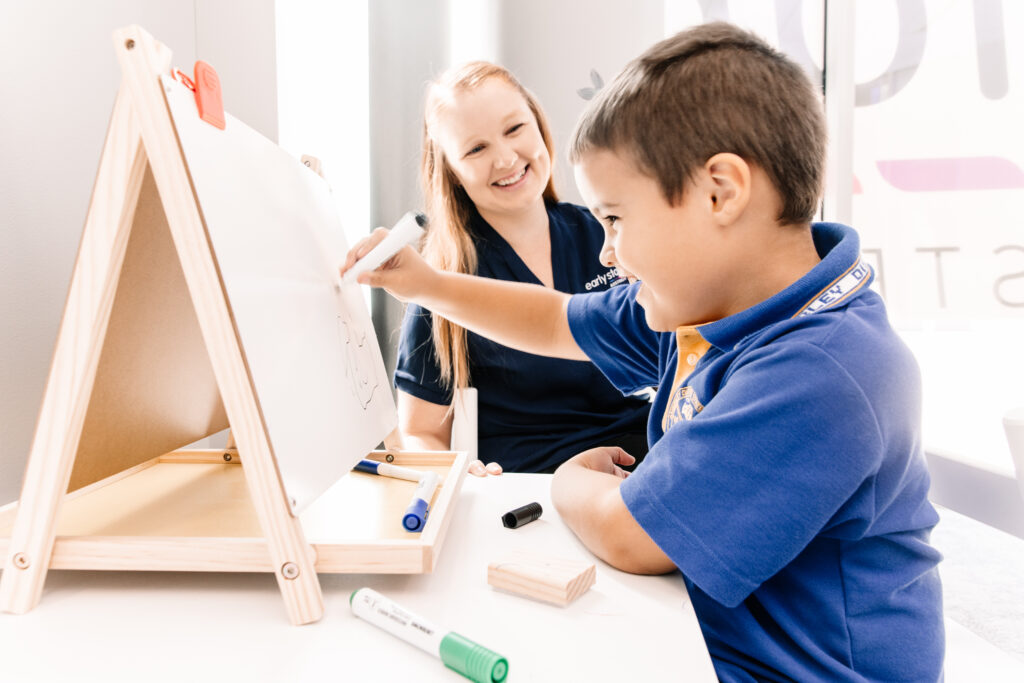
How psychologists engage with children
While CBT is mainly based on verbal engagement, there is often the need to take a slightly more active and imaginative approach, particularly when dealing with younger children.
Play and Metaphors
One approach is to engage children through play. Understanding each child’s unique interests and personality, creative and child-friendly play approaches are used to embed CBT and other therapy techniques.
A typical program of anxiety psychological support
Typically planned over about a 3-month period, therapy typically begins with a process of understanding how anxiety is triggered and experienced in a child’s particular case, thereby revealing both causes and ways to reduce those experiences.
The core of the intervention involves working with the child, family, and school as needed, developing internal understanding and capabilities as well as external supports, ensuring progress along the way.
The final step typically involves planning for discharge and future success, how to self-manage these things in the future, and what to look out for and how to re-engage with help in the future if needed.
Engaging and Early Start Child Psychologist
If you think it might be time to get a child psychologist involved to help support your child’s back-to-school anxiety, you are welcome to enquire about what is involved by clicking the button below. Or, if you have already received a referral from your GP, then you can click below to make a booking.
A referral is not needed to see a child psychologist, but clients with a mental health care plan referral from their GP will receive a Medicare rebate for anxiety support with a child psychologist.
We will be delighted to help you navigate through the options and find the best way to support your child to feel safe and happy at school, fully ready to make new friends and learn new things.
Reach out to our care team to learn more about how Early Start Australia can support your child and family or contact us today to learn more or book an appointment.