


Your Child’s First Therapy Session: What to Expect, What to Bring, and How to Get the Most From It
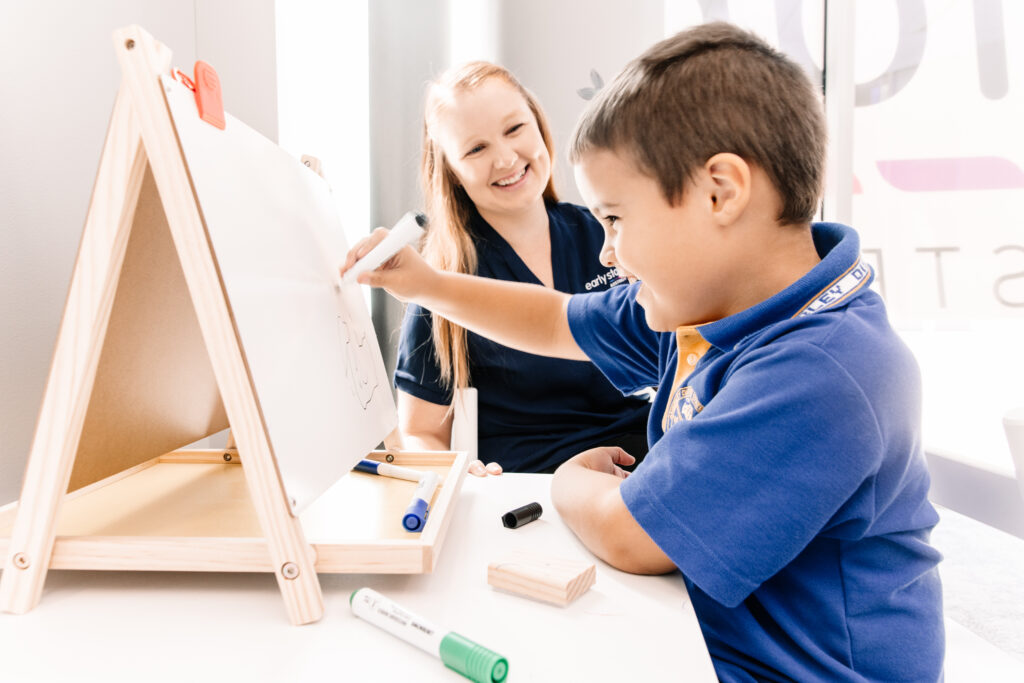
Taking the first step towards therapy for your child can bring a mix of emotions.
You might be feeling relieved to finally get answers, hopeful about the support ahead, or perhaps a little nervous about what to expect. If your child has a developmental delay, communication challenges, sensory differences, emotional regulation difficulties, physical development concerns, or you’re simply worried they may not be meeting developmental milestones, you’re not alone.
Many parents arrive at their first appointment wondering:
- Does my child need therapy?
- Do I need a referral?
- What happens during the first appointment?
- Should I stay in the room?
- Can siblings attend?
- What is a Service Agreement?
- What should I bring?
- How can I help my child get the most out of therapy?
The good news is that your first appointment isn’t about having everything figured out. It’s about beginning a partnership with a team that wants to understand your child, learn what’s important to your family, and develop a plan that supports meaningful progress in everyday life.
Why Early Intervention Matters
One of the most common questions parents ask is: “Should I wait and see, or should I seek support now?”
If you have concerns about your child’s development, seeking advice early can be beneficial.
Research shows that early intervention can support children’s development, participation and learning while also helping families better understand their child’s strengths and needs. Early support can improve a child’s participation at home, childcare, kindergarten, school and within the community.
Importantly, early intervention isn’t about labelling children. It’s about providing opportunities to build skills, confidence and independence during a period of rapid growth and development.
The Raising Children Network highlights that early intervention can help children develop new skills and support families to understand how best to respond to their child’s individual needs.
What Happens During a Child’s First Therapy Appointment?
A first appointment is all about understanding, connecting and planning.
Your therapist wants to get to know your child as a whole person, not just the concern that brought your family through the door.
During the appointment, your therapist may:
- Learn about your concerns and priorities
- Discuss your child’s strengths and interests
- Explore daily routines at home, childcare, kindergarten or school
- Gather information about development and participation
- Observe your child through play and interaction
- Answer questions about therapy and next steps
- Discuss potential therapy goals
The goal isn’t to diagnose or “fix” everything in one session. Instead, it’s to begin building a shared understanding of your child’s strengths, challenges and opportunities for growth.
Expect Plenty of Play
Parents are often surprised by how much play happens during therapy. For children, play is often the best way to learn and show what they can do.
While your child is playing, your therapist may be observing:
- Communication skills
- Social interaction
- Play skills
- Attention and engagement
- Emotional regulation
- Fine motor skills
- Gross motor skills
- Movement and coordination
- Sensory preferences
- Problem-solving abilities
To your child, it may simply feel like fun. To your therapist, it’s an opportunity to understand how your child learns, communicates and participates in everyday activities.
Why Play Is So Important
According to Early Childhood Australia, play is central to children’s learning and development. Through play, children develop communication, social, emotional, physical and problem-solving skills.
This is one reason play-based assessment and therapy are so widely used in paediatric allied health services.
Do I Need a Referral?
Another question we hear regularly is: “Do I need a referral for Speech Pathology, Occupational Therapy, Physiotherapy or Psychology?”
In most cases, no referral is required to access therapy services at Early Start Australia. Families can often contact their nearest clinic directly to discuss concerns and arrange an appointment.
However, if you intend to access Medicare rebates, you will generally need appropriate referral documentation before therapy begins.
Examples may include:
- GP Chronic Condition Management Plans
- Mental Health Care Plans
- Other eligible Medicare referrals
Submitting these beforehand helps the team prepare appropriately and discuss any applicable funding arrangements.
What Should I Bring?
Most families don’t need to bring very much.
We generally recommend:
- Your child
- Relevant referrals or reports
- Previous assessments or medical information
- A favourite comfort item such as a toy or blanket
- Any questions you’d like to ask
For younger children, it can also be helpful to bring:
- Spare clothes
- Nappies and wipes
- A drink bottle
- Feeding items if needed
If there is anything specific required for your appointment, your therapist will let you know beforehand.
Should I Stay in the Room?
In many cases, yes. At Early Start Australia, we encourage parent and caregiver involvement wherever possible.
Why? Because therapy doesn’t only happen during appointments. Children often make the greatest progress when parents understand the strategies being used and feel confident supporting skill development between sessions.
You may be invited to:
- Observe activities
- Ask questions
- Participate in play
- Practise strategies
- Discuss goals and priorities
Every family is different, and your therapist will work with you to decide what level of involvement is most appropriate.
Can Siblings or Other Family Members Attend?
We understand that family life can be busy. Sometimes bringing siblings, grandparents or other caregivers to appointments is unavoidable, and occasionally it can even be helpful.
For example:
- Another caregiver may want to learn therapy strategies.
- Grandparents may be involved in day-to-day care.
- Siblings can sometimes participate in activities that support social interaction and play skills.
However, there are times when additional family members may be distracting depending on the goals being worked on. Your therapist will work with you to find the best arrangement for your child’s learning and participation.
The goal is never to exclude family members. The goal is to create the environment that gives your child the greatest opportunity to thrive.
Why Family Involvement Matters
Research consistently shows that children benefit when families are actively involved in learning and development. The Australian Institute of Health and Welfare notes that children often experience stronger outcomes when the important adults in their lives work together to support shared goals across home, educational and community settings.
Understanding Service Agreements and Service Plans
As therapy begins, you may hear the terms Service Agreement and Service Plan. Although they sound similar, they serve different purposes.
What Is a Service Agreement?
A Service Agreement outlines how therapy services will be delivered.
This may include:
- Recommended services
- Appointment frequency
- Fee information
- Funding arrangements
- Cancellation policies
- Responsibilities of both the family and provider
Think of it as the practical framework that supports your therapy journey.
What Is a Service Plan?
A Service Plan focuses on what therapy is working towards.
It typically outlines:
- Your child’s strengths and needs
- Therapy goals
- Recommended supports
- Home strategies
- Progress review timelines
Think of the Service Plan as your child’s therapy roadmap.
Goals might include:
- Using words, signs or gestures to request help
- Improving social skills
- Managing transitions more successfully
- Increasing independence
- Improving participation at mealtimes
- Building school readiness skills
The Service Plan is developed collaboratively and can evolve as your child’s needs and skills change over time.
You Are an Important Part of the Therapy Team
One of the biggest misconceptions about therapy is that progress only happens inside the clinic. In reality, some of the most meaningful learning happens between appointments.
Children learn through:
- Daily routines
- Play
- Mealtimes
- Bath time
- Getting dressed
- Community activities
- Childcare experiences
- Kindergarten participation
- School activities
Your therapist brings professional expertise. You bring something equally important: you know your child better than anyone. You understand their strengths, interests, motivations, challenges and routines.
When therapists and families work together, everyday moments become powerful opportunities for learning and skill development.
Supporting Your Child Beyond Therapy Sessions
Many parents ask: “What can I do at home between therapy appointments?”
The answer is often simpler than people expect. The most effective therapy strategies fit naturally into everyday family life.
Your therapist may suggest simple activities that support:
- Communication development
- Social interaction
- Emotional regulation
- Independence
- Fine motor skills
- Gross motor skills
- School readiness
- Participation in daily routines
Small, consistent opportunities often create the biggest gains over time.
Which Therapy Service Is Right for My Child?
Every child is different. Some children benefit from one service, while others benefit from a multidisciplinary approach.
Speech Pathology
Supports:
- Speech development
- Language development
- Social communication
- Literacy foundations
- Following instructions
Occupational Therapy
Supports:
- Fine motor skills
- Sensory processing
- Emotional regulation
- Independence
- School readiness
- Everyday participation
Physiotherapy
Supports:
- Gross motor development
- Balance and coordination
- Strength
- Movement skills
- Physical confidence
Psychology
Supports:
- Emotional regulation
- Anxiety
- Behaviour support
- Resilience
- Social skills
- School transitions
Relationships Are the Foundation for Learning
One of the guiding principles of Australia’s Early Years Learning Framework (EYLF) states:
“Children learn and develop in the context of their family, community and culture, and relationships are the foundation for learning.”
This aligns strongly with family-centred therapy and highlights why collaboration between families, educators and therapists is so important.
When children experience consistent support across the environments that matter most, they have more opportunities to learn, practise skills and build confidence.
Questions You Might Like to Ask
If you’re not sure where to start, consider asking:
- What did you notice about my child today?
- What are my child’s strengths?
- What goals would you recommend?
- What’s one thing we can practise at home this week?
- How will we measure progress?
- How often should therapy occur?
- What happens next?
Remember: therapy is a journey. You don’t need to ask everything during your first appointment. There will be plenty of opportunities to revisit questions and refine goals over time.
Frequently Asked Questions
A Partnership for Success
Starting therapy can feel like a big step, but you don’t need to have everything figured out before you arrive.
Your first appointment is designed to help your therapist understand your child, learn about your family’s priorities and develop a plan that supports meaningful participation in everyday life.
At Early Start Australia, our multidisciplinary team of Speech Pathologists, Occupational Therapists, Physiotherapists and Psychologists work alongside families to help children build the skills, confidence and independence they need to thrive at home, at school and in their communities.
Learn More About Early Start Australia
🔗 https://www.earlystartaustralia.com.au/
Find Your Nearest Clinic